Parable of the Polygons


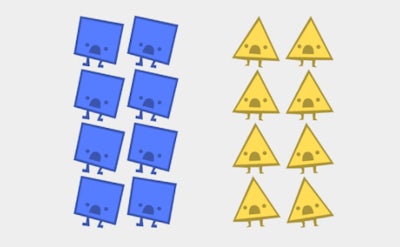
In Parable of the Polygons, simple shapes become a mirror for society. You move red squares and blue triangles across a 2D grid, watching segregation blossom or dissolve. One tiny bias can reshape an entire neighborhood. Brought to you by Juegos, the indie publisher that loves bite‑size learning games. That’s why the game sticks with you.
The control scheme is stripped down to the essentials. No menus, no tutorials—just pure point and click interaction blended with keyboard moves. You guide each polygon, pick it up, drop it, and watch the simulation react in real time.
The interface feels like a classic point and click adventure, but the underlying engine runs a full‑blown simulation. Each shape carries a hidden “happiness score,” which updates the moment you drop it into a new neighborhood. The numbers aren’t shown, but the visual cues are loud and clear.
The art style is crisp 2D vector graphics, bright enough to pop on any screen. A subtle soundscape tracks the health of each neighborhood—low hums for tension, bright chimes when diversity spikes. The aesthetic keeps the simulation feeling fresh.
Start by clustering like‑colored shapes. The game instantly flags the imbalance. Your goal is to break the pattern without triggering a cascade of forced moves. Small, deliberate swaps win the day. Remember: each move reshapes the whole grid, so plan two steps ahead.
Watch the heat map that flashes red when a region exceeds the tolerance threshold. Swap a triangle into a square‑heavy block, then nudge a square into the newly opened spot. The rhythm feels like a puzzle‑focused simulation, and the satisfaction spikes with every balanced outcome.
Keep an eye on the “tolerance meter.” It tells you how many neighbors each shape tolerates before it decides to relocate. Lower the tolerance, and the board becomes chaotic fast. Raising it gives you breathing room, but the challenge drops. Play with the settings to find your sweet spot.
Progression is measured by the percentage of integrated neighborhoods. Hit 80% and the game unlocks a new “mixed‑mode” level where red and blue start with a built‑in bias. The educational payoff is clear: tiny policy shifts can either cement or dissolve segregation.
Because the game is educational at its core, it doubles as a classroom tool. Teachers can pause the simulation, discuss the impact of each move, then resume to see the outcome. The quick rounds keep attention sharp while the underlying lesson sticks.
Replay value comes from the random seed that scrambles the starting layout each time. No two sessions look the same, and the “challenge mode” imposes a move limit. Beat the limit, and you unlock a badge that shows you’ve mastered bias mitigation.
Ready to test your bias‑busting skills? Grab Parable of the Polygons now and see how a few keystrokes can rewrite a virtual city. For more mind‑bending titles, swing by Juegos and add this simulation to your collection.

We use cookies to help you navigate efficiently and perform certain functions. You will find detailed information about all cookies under each consent category below.
The cookies that are categorised as "Necessary" are stored on your browser as they are essential for enabling the basic functionalities of the site.
Necessary cookies are required to enable the basic features of this site, such as providing secure log-in or adjusting your consent preferences. These cookies do not store any personally identifiable data.
Functional cookies help perform certain functionalities like sharing the content of the website on social media platforms, collecting feedback, and other third-party features.
Analytical cookies are used to understand how visitors interact with the website. These cookies help provide information on metrics such as the number of visitors, bounce rate, traffic source, etc.
Advertisement cookies are used to provide visitors with customised advertisements based on the pages you visited previously and to analyse the effectiveness of the ad campaigns.
We also use third-party cookies that help us analyse how you use this website, store your preferences, and provide the content and advertisements that are relevant to you. These cookies will only be stored in your browser with your prior consent.
You can choose to enable or disable some or all of these cookies but disabling some of them may affect your browsing experience.